

Blog
What to Eat in First Trimester: Nourishing Foods for Early Pregnancy

Introduction
Quick answer: In the first trimester, eat a mix of fruit, vegetables, whole grains, beans, eggs, well-cooked meat or fish, nuts, seeds, and pasteurized dairy or fortified alternatives. Small meals may work better than large ones. Add a prenatal vitamin recommended by your clinician and avoid alcohol and unsafe raw or unpasteurized foods.
The question what to eat in first trimester usually comes from two worries: whether the baby is getting enough, and whether nausea will make normal eating impossible. There is no single perfect menu. The best pattern is one you can digest, repeat, and expand over time. This guide explains what to choose, how to build meals, and when a symptom needs medical advice. Use it as a practical starting point, then adapt it to your own care plan.
What to Eat in First Trimester: the main idea
In the first trimester, eat a mix of fruit, vegetables, whole grains, beans, eggs, well-cooked meat or fish, nuts, seeds, and pasteurized dairy or fortified alternatives. Small meals may work better than large ones. Add a prenatal vitamin recommended by your clinician and avoid alcohol and unsafe raw or unpasteurized foods. The most helpful approach is to make a few safe choices consistently instead of chasing a perfect menu or avoiding a long list of foods without a clear reason.
Pregnancy nutrition is personal. Appetite, culture, budget, allergies, activity, medical history, and the number of babies you are carrying can all change the right plan. If your clinician has given you a specific diet, use that advice first.
Benefits and importance
Early pregnancy needs are supported by ordinary foods, not expensive special products. Whole grains and fruit provide carbohydrates and fiber; beans, eggs, dairy, tofu, and lean meats add protein; vegetables and fortified foods supply vitamins and minerals.
Protein and iron deserve attention when appetite is small. A boiled egg, a lentil soup, or a yogurt with nuts can add more nourishment than a large plate that you cannot finish.
Cold food often has less smell than hot food. Smoothies, chilled pasta salad, fruit, sandwiches, and overnight oats may be easier on a sensitive stomach. Keep food safe by washing produce and using pasteurized ingredients.
Food choices are personal. Cultural meals, a vegetarian pattern, allergies, budget, and morning sickness all matter. A registered dietitian can help you adapt the basic pattern instead of abandoning foods you enjoy.
Step-by-step guide
1. Start with foods that stay down
If nausea is strong, begin with dry or bland carbohydrates. Once that food feels settled, add a little protein or fat so the meal lasts longer.
Try this: Toast with a thin layer of nut butter can be easier than a full cooked breakfast.
2. Add one protein at each meal
Protein helps make meals satisfying. Use eggs, beans, lentils, chicken, fish low in mercury, tofu, yogurt, cottage cheese, nuts, or seeds.
Try this: Stir lentils into tomato soup or add a boiled egg to a plain rice bowl.
3. Choose fruit in a useful form
Whole fruit gives fluid and fiber as well as natural sweetness. Wash it under running water, even when you plan to peel it.
Try this: Keep a bowl of oranges, bananas, or washed berries where you can see it.
4. Make grains do more work
Oats, brown rice, quinoa, whole-grain bread, and fortified cereals can provide energy and nutrients. If whole grains worsen nausea, use a gentler grain and try again later.
Try this: Mix half whole-grain pasta with regular pasta while your stomach adjusts.
5. Include a calcium food
Milk, yogurt, cheese, calcium-set tofu, and fortified plant drinks can support calcium intake. Check labels on alternatives because amounts vary.
Try this: Use pasteurized yogurt in a smoothie or add cheese to a sandwich.
6. Use supplements wisely
Take the prenatal vitamin exactly as advised. Iron can upset some stomachs, so ask your clinician about timing or a different product rather than stopping on your own.
Try this: If the vitamin makes you nauseated, ask whether taking it with food or at night is appropriate.
Easy foods to keep in rotation
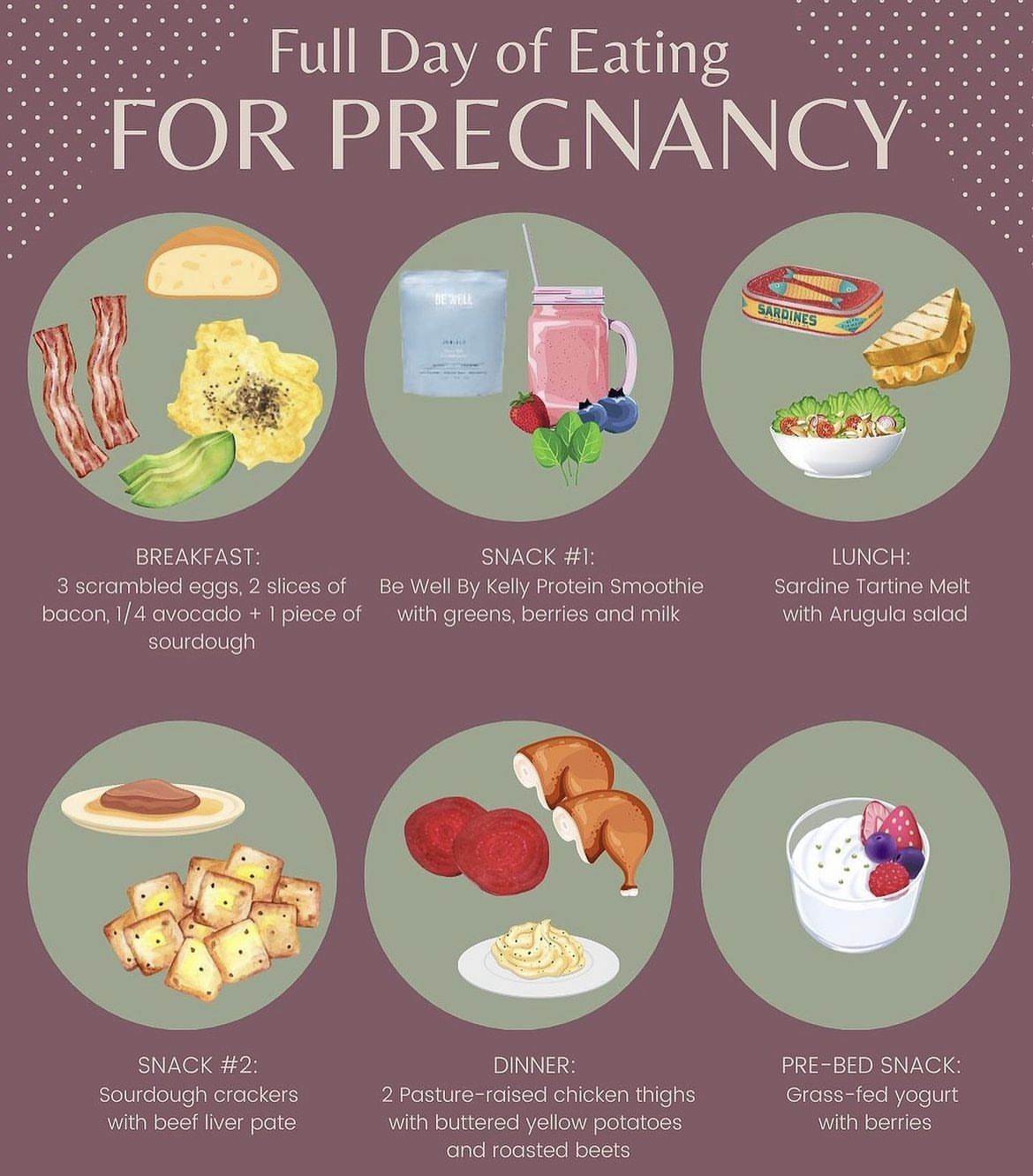
This is a sample pattern, not a required menu. Swap ingredients that do not suit your culture, budget, allergies, or symptoms. Keep perishable foods cold and ask your clinician about portions if you have diabetes, kidney disease, severe nausea, or another condition.
- Breakfast: overnight oats with yogurt, chia seeds, and a sliced banana.
- Quick meal: whole-grain toast with scrambled egg and avocado.
- Lunch: chilled pasta with chickpeas, cucumber, tomato, and a pasteurized cheese.
- Snack: an apple with peanut butter, or a fortified yogurt drink.
- Dinner: tofu stir-fry or chicken with rice and cooked vegetables.
- Low-appetite backup: soup, a banana, crackers, and milk or a fortified alternative.
Common mistakes to avoid
Small changes usually work better than strict rules. Watch for these common problems:
- Thinking only salads count as healthy food
- Skipping protein because meat smells unpleasant
- Drinking juice instead of eating whole fruit most of the time
- Buying herbal products without checking pregnancy safety
- Ignoring food safety because a food looks fresh
Expert tips for real life
- Use cold meals when kitchen smells are difficult
- Keep a short list of foods you can tolerate
- Add nutrition in small upgrades such as milk in oats
- Ask for help with shopping and meal preparation
- Record symptoms and foods if you need to find triggers
Related Pregnetic guides
For a simple breakfast example, see Are Corn Flakes Good for Pregnancy?.
If you are checking meat and food-safety choices, read Can I Eat Bacon During Pregnancy?.
For a related hydration and symptom question, see Are Dry Lips a Sign of Pregnancy?.
Trusted sources
These sources offer current, evidence-based pregnancy and food-safety guidance:
Frequently asked questions
What is the best breakfast in the first trimester?
The best breakfast is one you can tolerate and that combines carbohydrate with protein when possible, such as toast and egg, oats with yogurt, or cereal with milk.
Can I eat fruit every day in early pregnancy?
Yes, washed whole fruit can fit well in pregnancy meals. Vary colors and include other food groups so fruit is not your only source of nutrition.
What if vegetables make me feel sick?
Try cooked vegetables, mild soups, chilled vegetables, or small amounts mixed into familiar foods. Reintroduce variety as symptoms improve.
Are smoothies safe in the first trimester?
They can be safe when made with washed produce, pasteurized dairy or juice, and ingredients that suit your care plan. Avoid unpasteurized additions.
What can I eat when nothing sounds good?
Try small portions of bland foods such as toast, rice, noodles, potatoes, bananas, yogurt, or soup, then add protein as tolerated.
Should I avoid spicy food?
Spicy foods are not automatically unsafe, but they may worsen nausea or reflux for some people. Let your symptoms guide you.
Use this what to eat in first trimester guide as a starting point, then adjust it with your prenatal clinician for your health, symptoms, and food preferences.
Conclusion
What to Eat in First Trimester is less about one perfect food and more about a safe, varied pattern that you can maintain. Choose foods you tolerate, include the nutrients your clinician has highlighted, and make practical substitutions when appetite or energy changes.
If symptoms make eating or drinking difficult, ask for help early. Your prenatal team can review weight, blood tests, supplements, food safety, and any medical condition that changes your needs. This article is for general education and does not replace personal advice, diagnosis, or treatment from a licensed healthcare professional.